

How To Change Your Hairline With Makeup
Overview
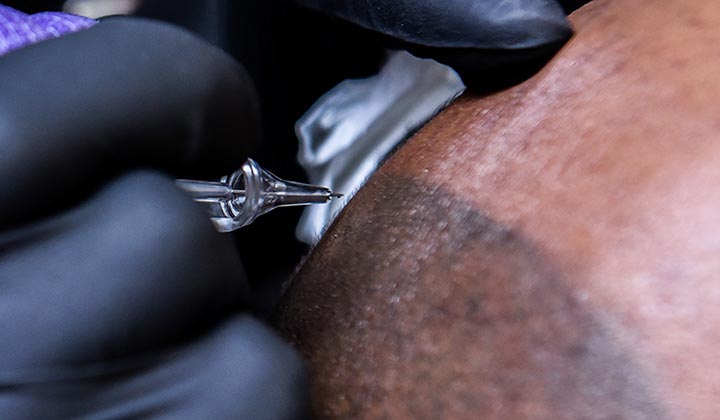
What is scalp micropigmentation?
Scalp micropigmentation is a cosmetic treatment for thinning hair or hair loss. It'south sometimes also called a hair tattoo. A provider uses thin, pocket-sized needles to deposit tiny dots of pigment (color) on the scalp. These dots give the advent of thicker hair. Scalp micropigmentation pigments are cosmetic-form, permanent inks.
When a skilled technician performs scalp micropigmentation, it can hibernate thinning areas on your scalp. It may too hide birthmarks or scars. The treatment tin can as well give the illusion of having shaved hair or a "buzz cut" on people who are bald. Scalp micropigmentation is noninvasive and doesn't require surgery or anesthesia.
Who is scalp micropigmentation for?
Scalp micropigmentation is a type of micropigmentation (permanent makeup). The treatment can create the appearance of thicker hair in people who have:
- Alopecia areata, an autoimmune status that causes hair loss.
- Chemotherapy-related pilus loss.
- Hair loss in women.
- Hormonal conditions that cause hair loss, including polycystic ovary syndrome (PCOS).
- Male blueprint baldness, receding hairline or baldness at the crown of the head.
- Thin hair or scalp show-through.
- Scars or birthmarks on the scalp.
Does scalp micropigmentation grow hair?
Scalp micropigmentation doesn't grow hair or change your natural pilus growth. It's not a hair loss treatment. Information technology also won't crusade hair loss or harm your existing hair follicles. Scalp micropigmentation is a way to make it look like you have fuller, thicker hair.
Procedure Details
What happens earlier scalp micropigmentation?
Before scalp micropigmentation:
- Wash your hair and scalp before your appointment.
- When you arrive, your practitioner marks the areas of the scalp that they'll care for.
- If yous're bald, you and your provider may create a hairline based on your facial structure, age and head shape.
- Y'all and your provider choose pigments that match your pilus colour.
- Your practitioner applies numbing medicine to the scalp to make yous more comfortable. The needles are thinner and smaller than tattoo needles, so scalp micropigmentation is ordinarily less painful than getting a tattoo.
What happens during scalp micropigmentation?
Your provider uses a needle to deposit medical-class pigment on the desired areas of the scalp. The dots vary in size, angle and depth to provide a natural, hairlike appearance.
Your handling may accept up to five hours, depending on the size of the treatment surface area. Well-nigh people need three or more than treatments, spaced several weeks autonomously. Each treatment adds more than paint to create the look of thick hair.
What happens afterward scalp micropigmentation?
Since there'due south no surgery or anesthesia, you tin can become dorsum to daily life quickly. There are very few side furnishings of scalp micropigmentation. You may have some redness on your scalp that lasts several hours. Y'all tin can wear a chapeau or scarf to embrace the scalp if you lot desire.
Risks / Benefits
What are the advantages of scalp micropigmentation?
The benefits of scalp micropigmentation compared to hair transplantation surgery include:
- Less invasive (no surgery or incisions).
- Less pain.
- Lower toll.
- No downtime.
What are the risks or complications of this procedure?
The biggest risks of scalp micropigmentation come with using an unlicensed or inexperienced practitioner who may not take the necessary precautions.
Possible risks include:
- Allergic reaction to the cosmetic pigments.
- Infection from unsterilized needles.
- Unnatural or undesirable appearance after treatment.
To avoid these risks:
- Cull a licensed scalp micropigmentation technician.
- Ask to encounter before and after scalp micropigmentation photos of their work.
- If you take allergies, discuss them with your technician before the procedure.
Is there anyone who shouldn't become scalp micropigmentation?
People who are prone to keloids (scars that grow larger than normal) should non get scalp micropigmentation. The treatment can cause keloids to course in some people.
Recovery and Outlook
What is the recovery fourth dimension later scalp micropigmentation?
Later on the treatment, yous may need to avoid sure activities for several days, including:
- Getting your scalp wet. Clothing a shower cap while showering or take baths to proceed your head dry out. Don't wash your hair or scalp until your provider says information technology's OK to do and so.
- Heavy exercise.
- Hot, steamy showers or steam rooms. The steam can cause moisture to collect on your scalp.
- Sun exposure on your scalp.
- Sweating or beingness in a hot surroundings.
How long does scalp micropigmentation last?
Scalp micropigmentation commonly retains its appearance for four years or longer. The pigments used in scalp micropigmentation are permanent cosmetic pigments. They are not the same as tattoo ink, so they resist fading or color change.
When to Call the Doctor
When should I see my healthcare provider?
Call your healthcare provider if you notice possible signs of infection after scalp micropigmentation, such as:
- Fever.
- Pus or drainage.
- Severe pain.
- Severe redness.
- Swelling.
Often Asked Questions
What questions should I ask my provider before scalp micropigmentation?
One time you've chosen a licensed and experienced micropigmentation specialist, ask them:
- Am I a good candidate for scalp micropigmentation?
- Are my expectations realistic?
- How will y'all keep me comfortable during the process?
- How should I care for my scalp afterwards the process?
Does insurance cover scalp micropigmentation?
No. Scalp micropigmentation and permanent makeup are elective (optional) procedures. Ask your provider well-nigh the cost of the procedure and how many treatments you will demand.
Is scalp micropigmentation worth it?
When performed by a skilled provider, many people are satisfied with the results of scalp micropigmentation. Considering the pigments last several years, scalp micropigmentation is low-maintenance and long-lasting.
A note from Cleveland Clinic
Hair loss or thinning doesn't have to interfere with your self-conviction. People experience hair loss for many reasons, either due to atmospheric condition such as alopecia, male person blueprint baldness or hormonal conditions. Or maybe you have a scar or birthmark you want to cover. Scalp micropigmentation is an effective, noninvasive way to make your hair look thicker.
Source: https://my.clevelandclinic.org/health/treatments/22719-scalp-micropigmentation
Posted by: hamlinspinhe.blogspot.com
0 Response to "How To Change Your Hairline With Makeup"
Post a Comment